

The Ruins You’ll Miss If You Don’t Know Where to Look: Hidden History at Eno River State Park
I lived in the Triangle for decades before I ever set foot in Eno River State Park.
That feels almost embarrassing to admit now — especially considering how much I love North Carolina history, quiet trails, and places that still feel a little undiscovered.
But it wasn’t until 2024, when I finally went with friends who knew where to look, that I realized just how much I’d been missing.
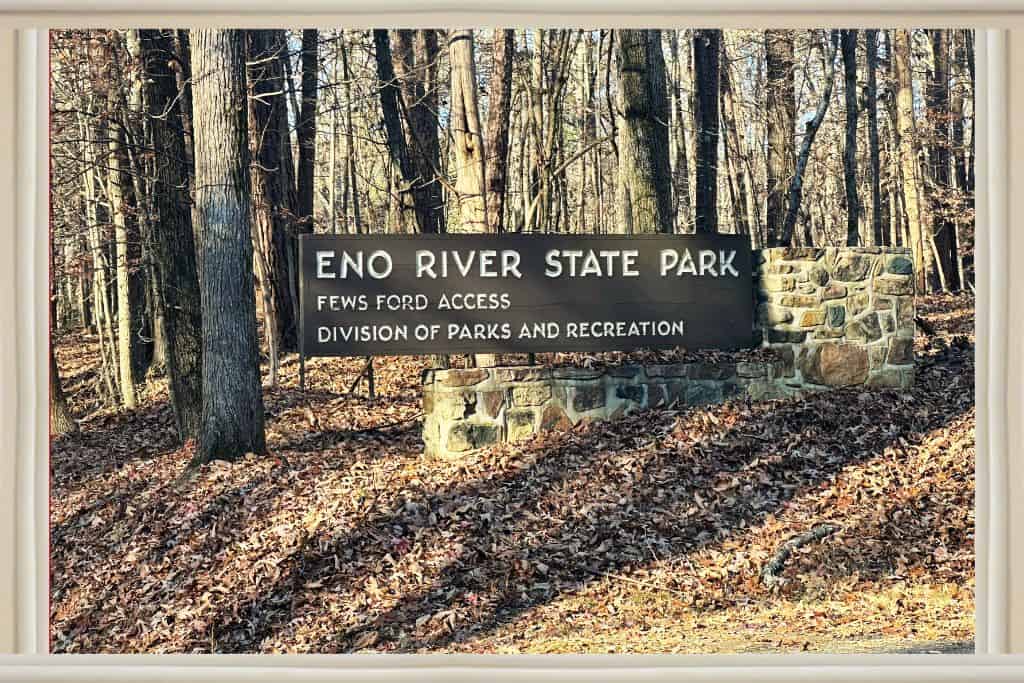

Because here’s the thing about Eno River:
If you don’t know what you’re looking for, you’ll walk right past centuries of history without realizing it.
A Note of Acknowledgment
Eno River State Park sits on land once lived on and cared for by Indigenous peoples, including the Eno, Shakori, and Occaneechi tribes. We acknowledge their deep connection to this place and recognize that the river and forests were communities long before they were trails.
This land didn’t start being meaningful when it became a park.
Eno River has miles of trails with inclines, muddy spots, rocks, and roots in the paths. Make sure you have shoes fit for the job!

This hiking shoe was a game changer! My feet stopped hurting and I could walk pain free!
Finding Eno — and Finding What’s Hidden
My first visit wasn’t solo, and that mattered.
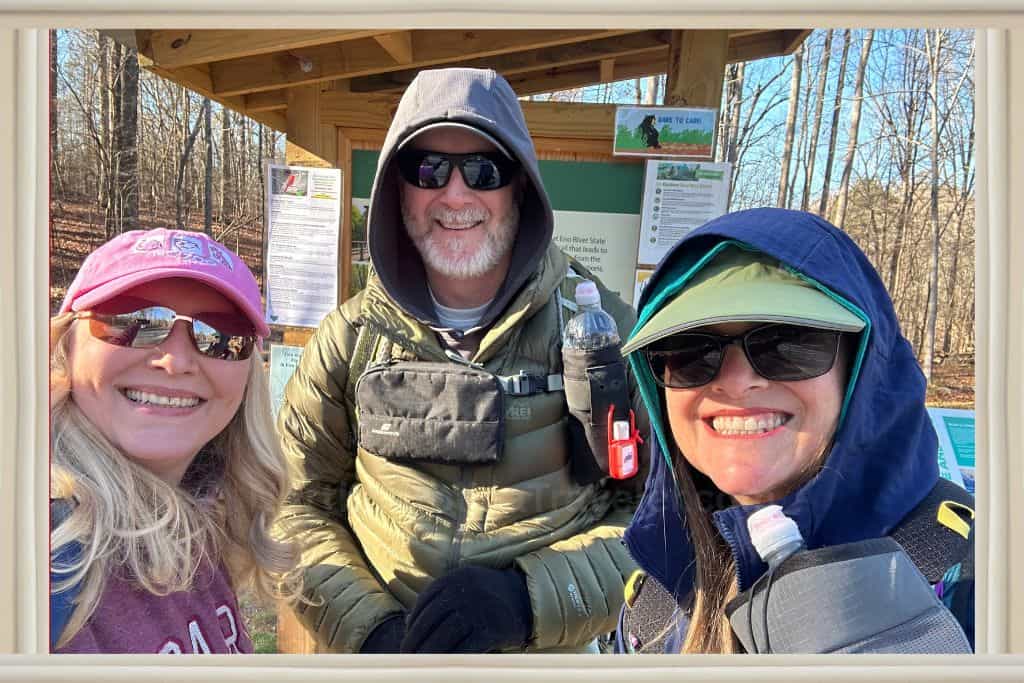
My friends knew which trails to take, when to slow down, and where to glance off the path just enough to notice something that didn’t belong to the woods.
A stacked stone wall.
The Thomas Cole house & The sisters house.
Logs that didn’t fall naturally.
Another visit that really stuck with me was a free, guided New Year’s hike offered by the park.
If you’ve never taken one of Eno River’s guided hikes, I can’t recommend them enough.
They run throughout the year, and they’re packed with context — not just about the ruins, but the flora, fauna, and layered history of the river valley itself.
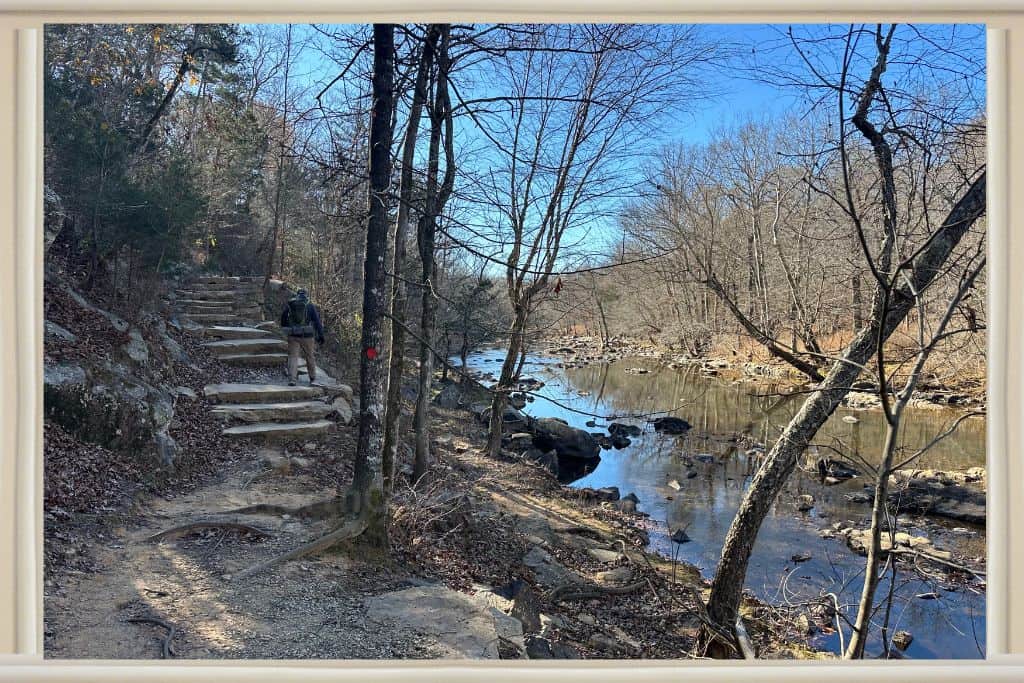
They’re also perfect if you enjoy hiking solo but don’t always want to feel alone.
That hike took us to several of the historic ruins, but it also helped me understand the land — how people lived here, worked here, and eventually moved on, leaving pieces of their lives behind as well as the plants and animals that live there.
A Valley That Was Once Full of Life
Before the Ruins: The First People of the Eno River
One thing I also learned while hiking the Eno is that the settler ruins aren’t the beginning of the story here.
Long before cabins, mills, or cemeteries, Indigenous peoples lived along this river for thousands of years.
By the time Europeans arrived in the 1600s, the Eno River valley was home to Siouan-speaking tribes, including the Eno, Shakori, and Occaneechi.
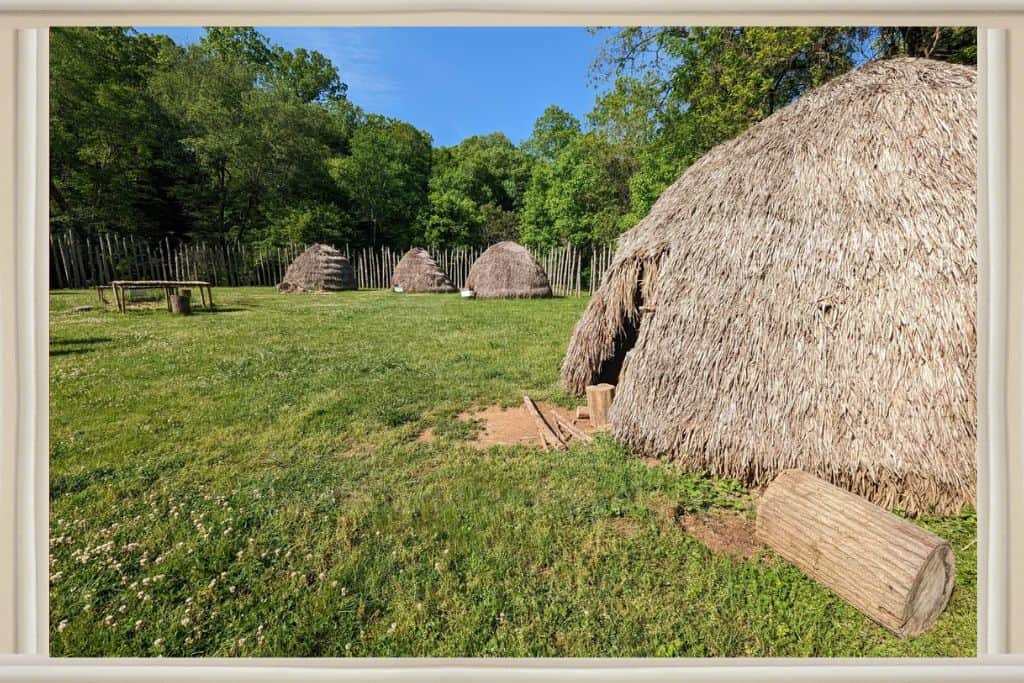
From Visit Hillsborough
The river itself is named for the Eno people.
This wasn’t an isolated place. The river sat near the Great Indian Trading Path, a major Indigenous travel and trade route that connected communities across the Southeast — long before highways or towns existed.
Very little of that time is obvious today. Instead of buildings, what remains are quieter traces — stone tools, pottery fragments, and subtle changes in the land that archaeologists still study.
Once you know that, the Eno feels less like untouched nature and more like a place layered with lives you simply have to slow down to notice.
Want to Go Deeper? Start Here
If this part of the story sparks your curiosity, these are great places to keep learning:
- Occaneechi Band of the Saponi Nation – Living history and cultural preservation
- North Carolina Museum of History – Indigenous history of the Piedmont
- Eno River Association – Stories and research focused on the river
Why This Matters (and Why I’m Glad I Finally Came Here)
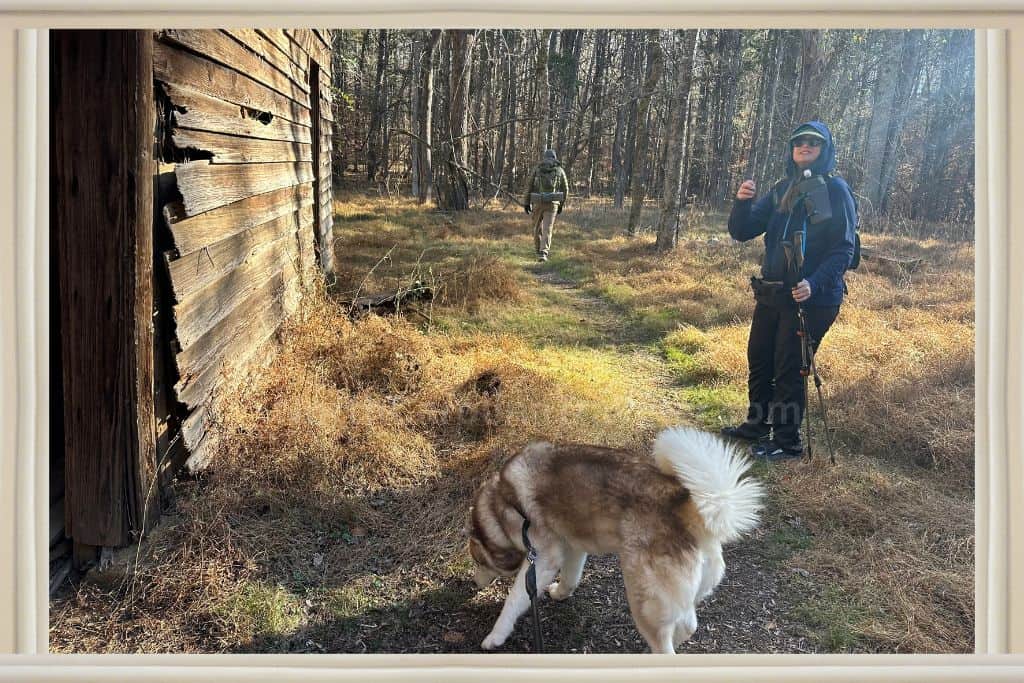
I spent years living nearby without ever visiting the Eno.
And now I understand why that feels like such a miss.
This river has always been layered — lives built, lives lost, lives moved on. The ruins are what catch your eye, but the deeper story is what stays with you.
And maybe that’s the most Eno River thing of all.
You don’t stumble into its history by accident.
You have to slow down, follow the quieter trail, and actually look.
Long before this was a state park, the Eno River valley was home to villages, farms, mills, churches, and families who depended on the river for survival.
What we now experience as peaceful hiking trails once echoed with work, children’s voices, livestock, and daily routines.
What remains today are fragments — fragile, weathered, and easy to miss.
Cole Cabin (Anthony Cole House)
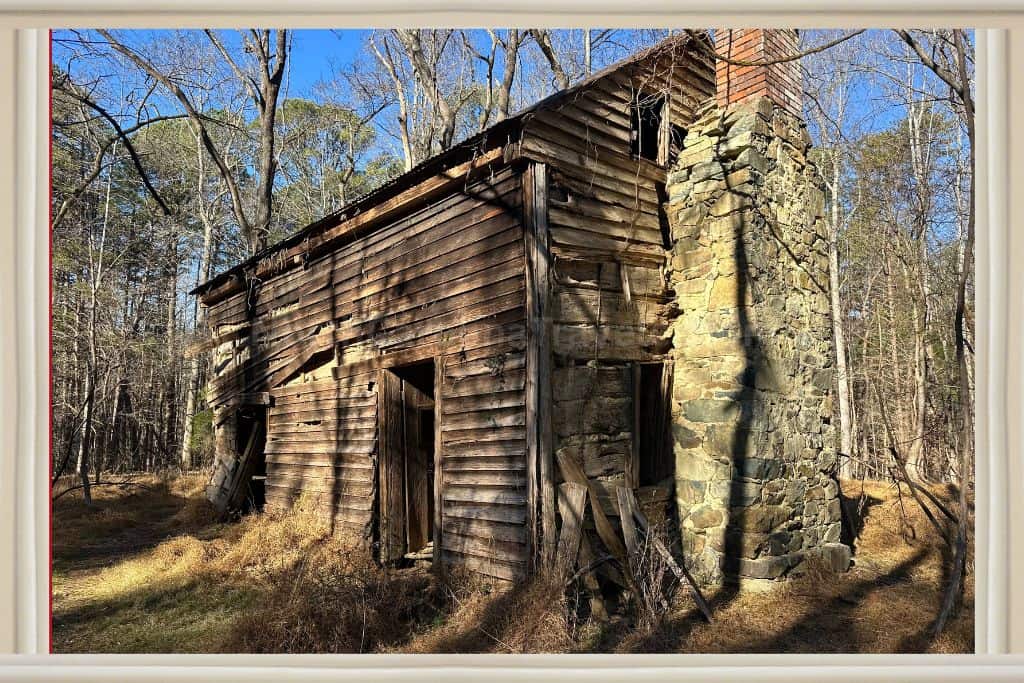
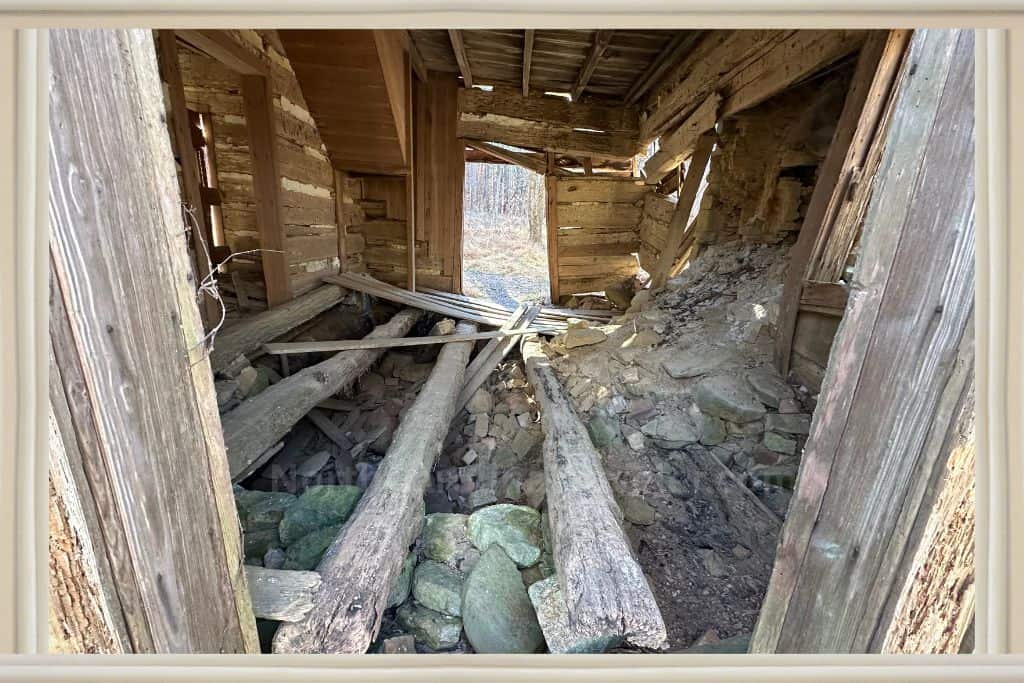
Tucked near Buckquarter Creek Trail, the Cole Cabin is one of the most striking reminders of how full life once was here.
Anthony Cole was a farmer and landowner along the Eno River. He and his wife, Susannah, raised 14 children in this log home.
Fourteen! 🤯
Under one roof.
No electricity.
No running water.
Just land, labor, and family.
The Cole family became prominent in the area, owning land and operating mills — which is why the name still lingers today on places like Cole Mill Road.
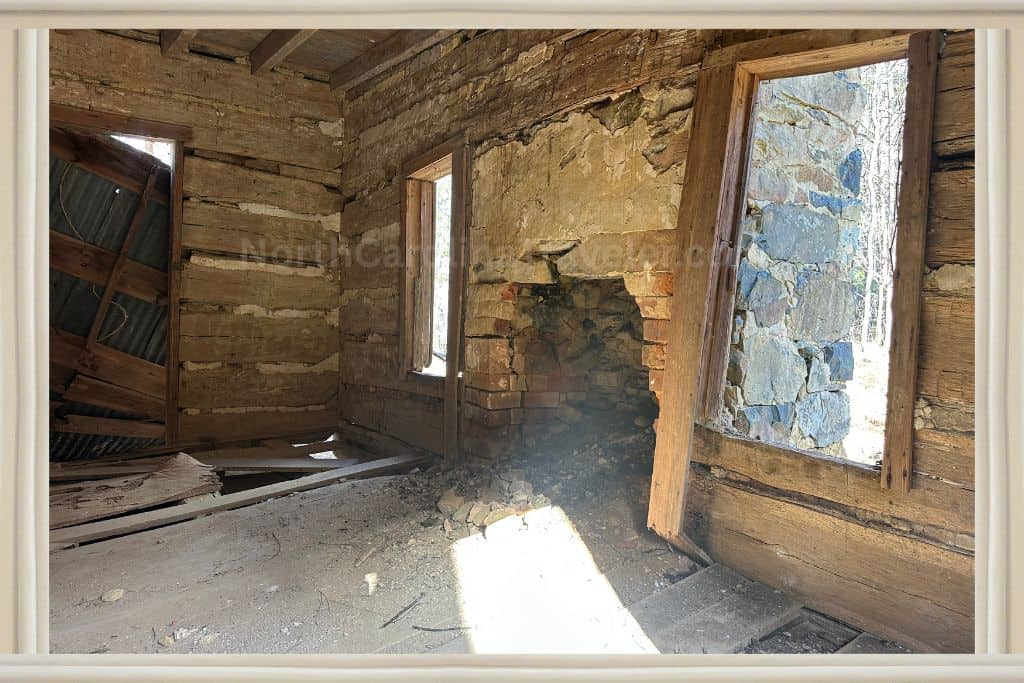
Standing near the cabin now, as the logs soften and the structure slowly gives way to the forest, it’s hard not to imagine how loud and crowded this place once was.
They say what is left today belonged to Thomas Cole, Anthony’s first son.
The silence feels earned.
Piper-Cox House
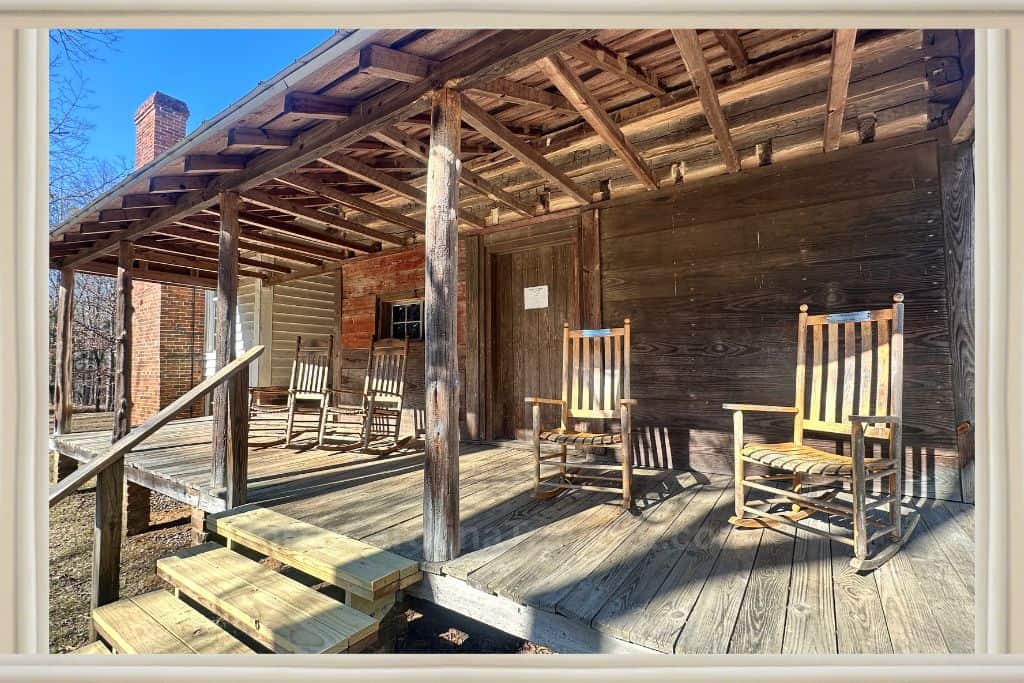
The Piper-Cox House is a rare contrast among the ruins — not abandoned, but preserved.
What makes it fascinating is that it’s essentially two homes joined together. The original structure began as a small log cabin built by the Piper family in the late 1700s or early 1800s. In the 1870s, the Cox family expanded it, adding a larger, more refined section directly onto the original cabin.
Today, it serves as a museum and offers one of the clearest windows into how homes — and lifestyles — evolved over generations along the Eno.
It’s the “before and after” photo the rest of the ruins never got.
Sister’s House
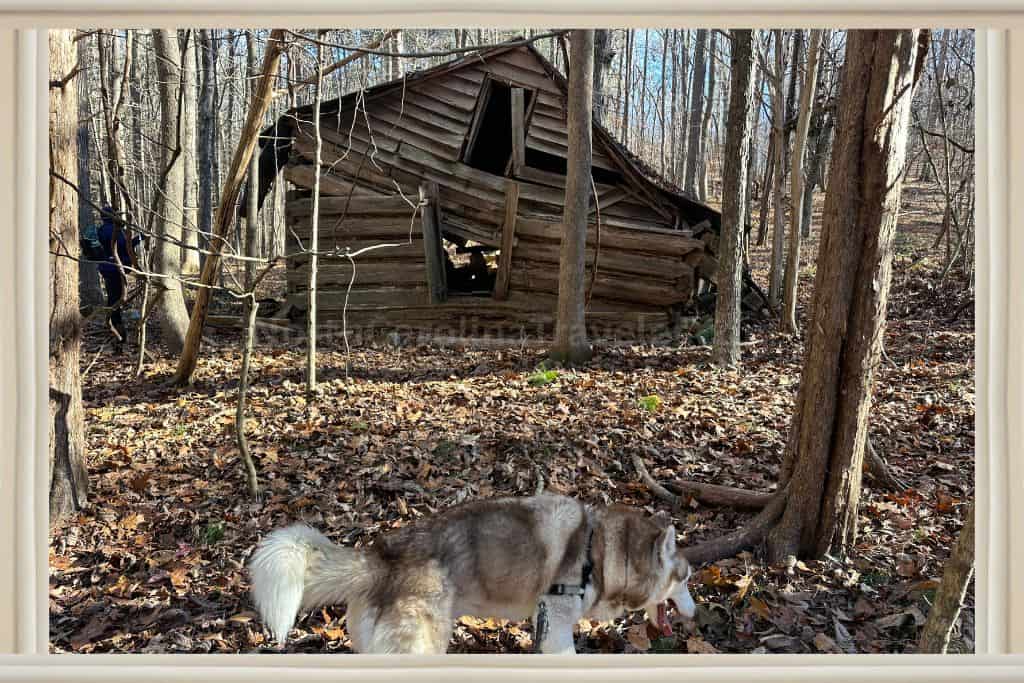
Near Ridge Trail sits a smaller, more fragile structure known as Sister’s House.
Local history suggests it may have been associated with the Cole family, possibly built for one of the daughters or female relatives.
It’s modest. Quiet. Easy to miss.
And somehow, that makes it feel more intimate — like a footnote in a much larger family story, slowly being reclaimed by the woods.
Cabelands Ruins & Cemetery
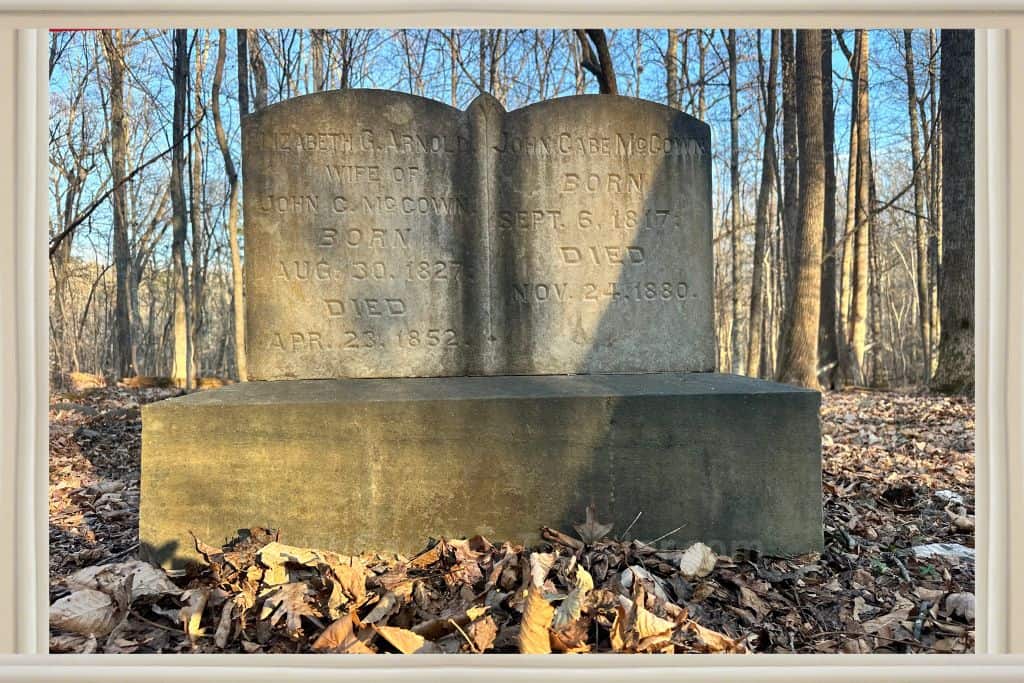
One of the most haunting stops is the Cabelands area, where the remains of an old mill sit not far from a small family cemetery.
Only about a dozen headstones are still visible, but historians believe many more people are buried here, their graves marked now only by sunken ground.
Nearby, the stone remnants of Cabe’s Mill hint at a time when this valley was an active center of work and production.
It’s a place that asks for quiet respect — and gives you perspective whether you’re looking for it or not.
Where to Look (Without Spoiling the Experience)
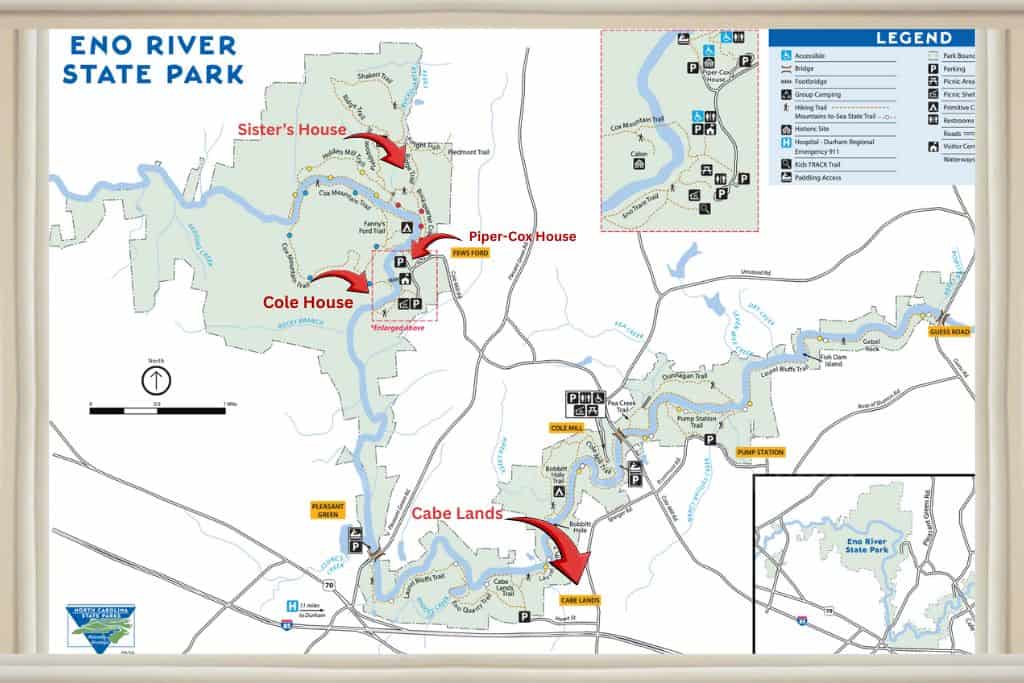
(I added the arrows and location names)
The official park map does help — and you can grab one online or at the trailheads — but knowing the general areas makes all the difference:
- Fews Ford Access → Piper-Cox House, Buckquarter Creek Trail
- Buckquarter Creek Trail → Cole Cabin and nearby remnants
- Ridge Trail → Sister’s House
- Cabe Lands Access → Cabelands Cemetery and mill ruins
Some paths are faint. Some clues are subtle. If you feel like you’re wandering just slightly off the obvious trail — you’re probably close.
Why Guided Hikes Are Worth It
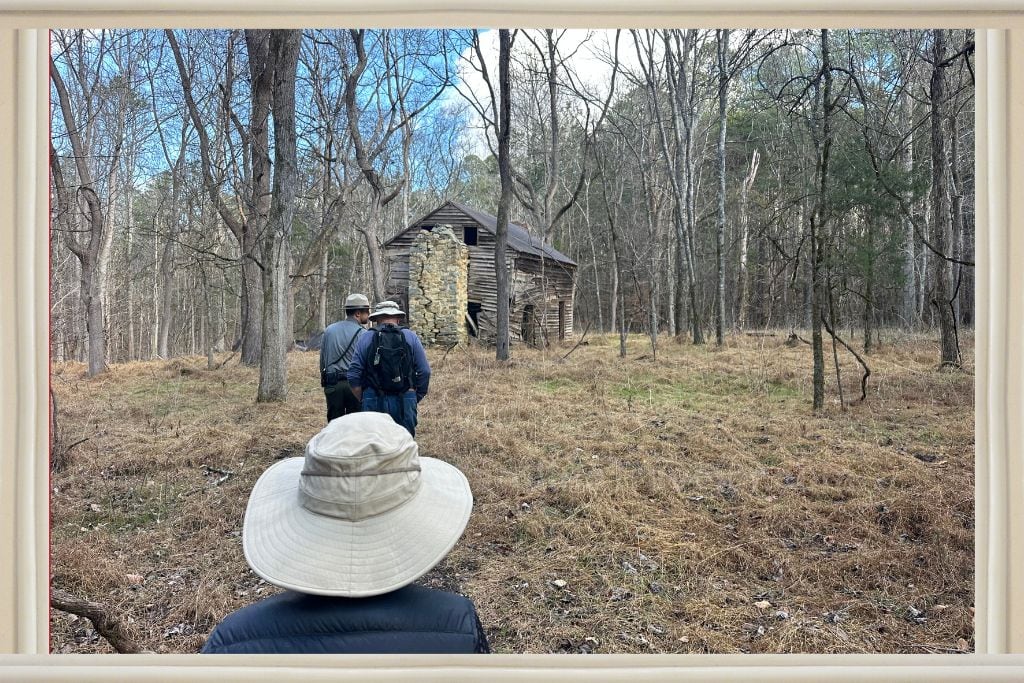
If there’s one piece of advice I’d give, it’s this: take a guided hike.
The park offers free guided hikes throughout the year, and they add layers you won’t get on your own — history, ecology, stories passed down, and details you’d never think to notice.
It’s also not easy to know exactly where to find these sites. They are off the path a bit and can be easy to miss if you don’t know where to look.
They’re also a great option if you’re solo but want shared experience without pressure.
Sometimes knowing why something matters changes how you see it forever.
Before You Go: Check Trail Conditions
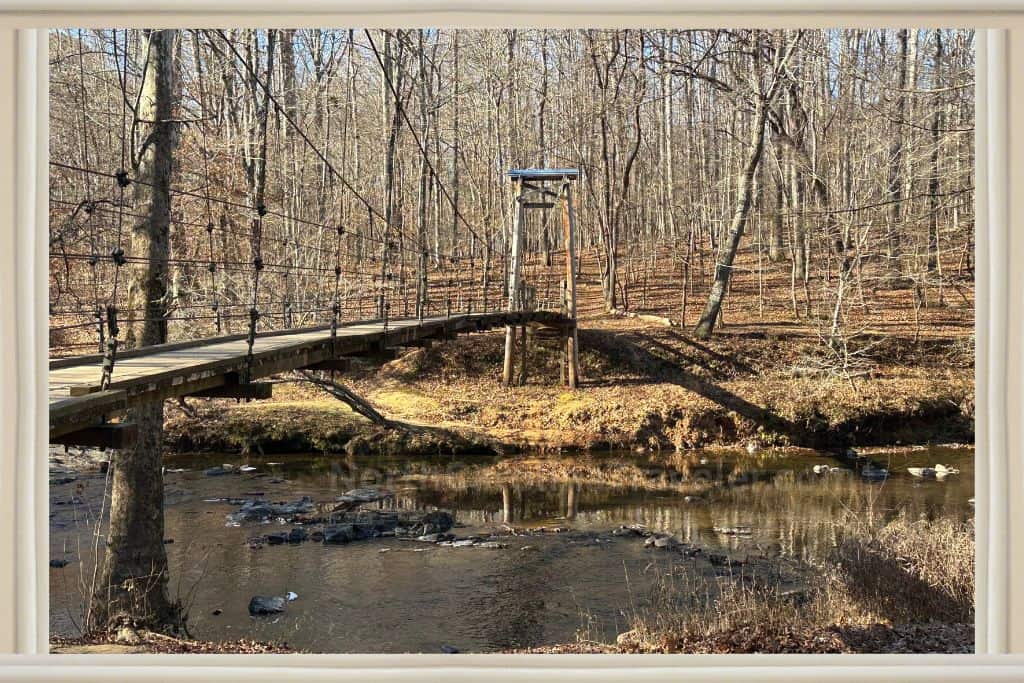
One important thing to know about Eno River State Park is that trail access can change — sometimes with little notice.
Because the park follows a working river, certain trails may temporarily close due to:
- Heavy rain or flooding
- Downed trees or trail obstructions
- Erosion or maintenance work
- Seasonal safety concerns
Even on a beautiful day, conditions can look very different once you’re closer to the water.
Before you head out, it’s worth taking a quick minute to check current trail status. It can save you time, frustration, and a long walk to a closed trailhead.
👉 Check current trail conditions before your visit by clicking here
Think of it as part of the experience — a little prep so you can spend more time wandering and less time rerouting.
When to Visit: Seasonal Highlights at Eno River State Park
One of the reasons Eno River keeps pulling me back is that it never feels the same twice. Each season brings its own quiet surprises — some subtle, some show-stopping — if you know when to look.
🌼 Late Winter / Early Spring (February–March)
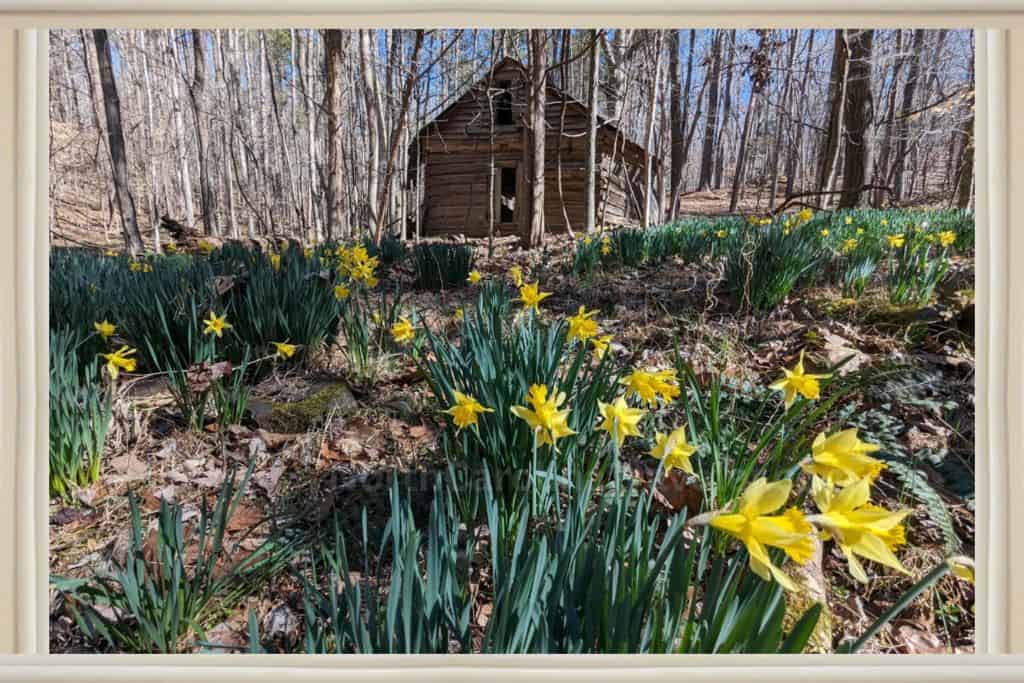
February is one of those months people tend to overlook, which is exactly why it works here. Daffodils begin popping up in parts of the park, often near old home sites — a small but powerful reminder that people once lived and gardened here.
It’s also one of the best times to spot ruins clearly, before the woods fully leaf out and start hiding everything again.
🌸 Spring (March–May)
Spring brings a surge of wildflowers, budding trees, and active wildlife. This is when the park starts to feel alive again — birdsong everywhere, fresh green growth, and longer days that invite lingering.
Guided hikes in spring often focus on flora, early growth, and historical land use, making it a great season if you want context along with your miles.
🌿 Summer (June–August)
Summer transforms Eno River into a green tunnel. The river becomes the star — perfect for cooling off, relaxing, or slow wandering along shaded trails.
This is also when the ruins become easier to miss. Dense growth hides old foundations and cabins, which makes guided hikes or prior knowledge especially valuable if history is your goal.
🍂 Fall (September–November)
Fall is one of the most rewarding times to visit. Changing leaves, cooler air, and clearer sightlines make it easier to spot stonework, chimneys, and old structures tucked into the woods.
It’s also a reflective season — the kind that pairs well with quiet ruins and long walks that feel a little timeless.
❄️ Winter & the First Day Hike (January 1)
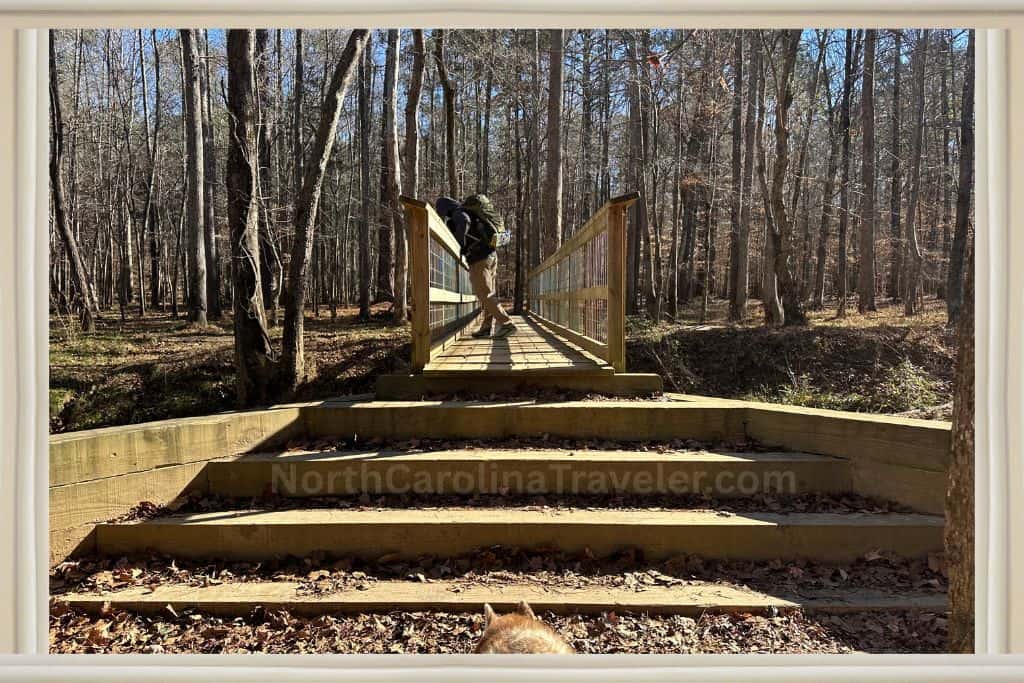
One of the most meaningful traditions at Eno River is the First Day Hike on January 1st. Eno River was the first state park in North Carolina to plan and host an official First Day Hike, setting the model for what later became a statewide tradition.
The hike is free, guided, and often includes history, ecology, and — if conditions allow — visits to some of the park’s historic sites. It’s also a wonderful option if you’re a solo hiker who still wants shared experience and storytelling along the way.
Why This Matters
Each season reveals — or conceals — a different layer of Eno River’s story. What feels hidden in summer might be obvious in winter. What looks like just another patch of woods in spring might turn out to be a former homestead once the leaves fall.
And that’s kind of the point.
Eno River doesn’t rush you. It rewards patience, timing, and curiosity — the same way it always has.
Where to Stay Nearby
If you want to turn this into a weekend:
- Durham hotels (downtown or near Duke) offer easy access and great food scenes
- Hillsborough make quieter home bases with historic charm
- Nature lovers might enjoy nearby cabins or rentals closer to the river corridor
Where to Eat After Your Hike
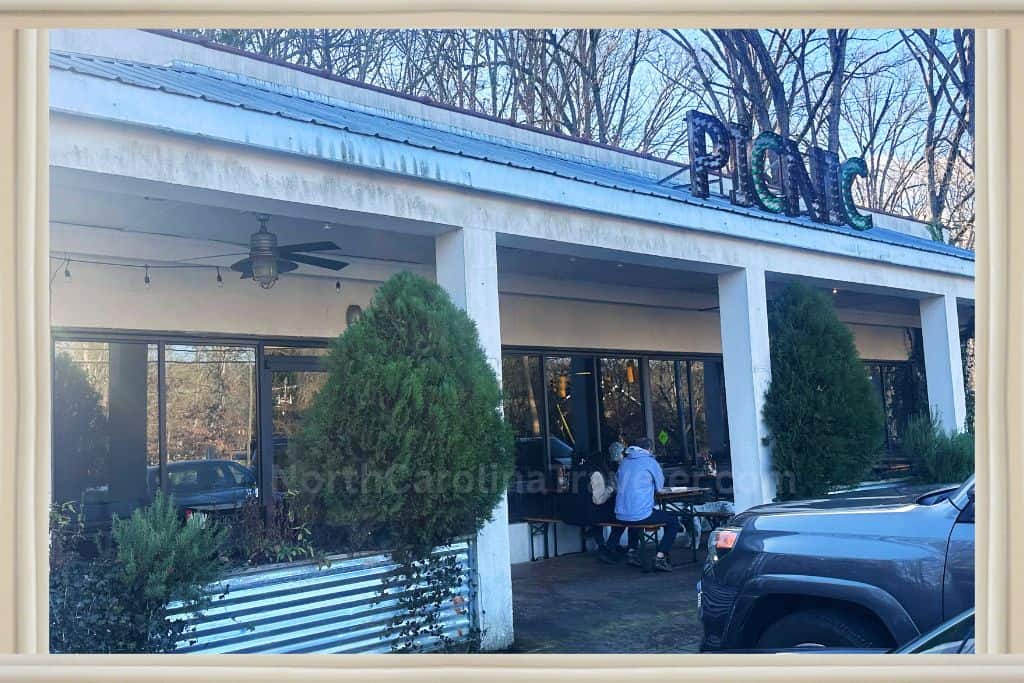
You’ve earned a good meal!
Picnic
After wandering the trails at Eno River, do yourself a favor and drive a few minutes down the road to Picnic.
I don’t say this lightly: I used to own a BBQ restaurant with my husband, which means I’m a little picky about barbecue.
I know what goes into it. I know how fickle it can be.
And I know when something’s being done right.
I know when it’s real and when it’s boxed.
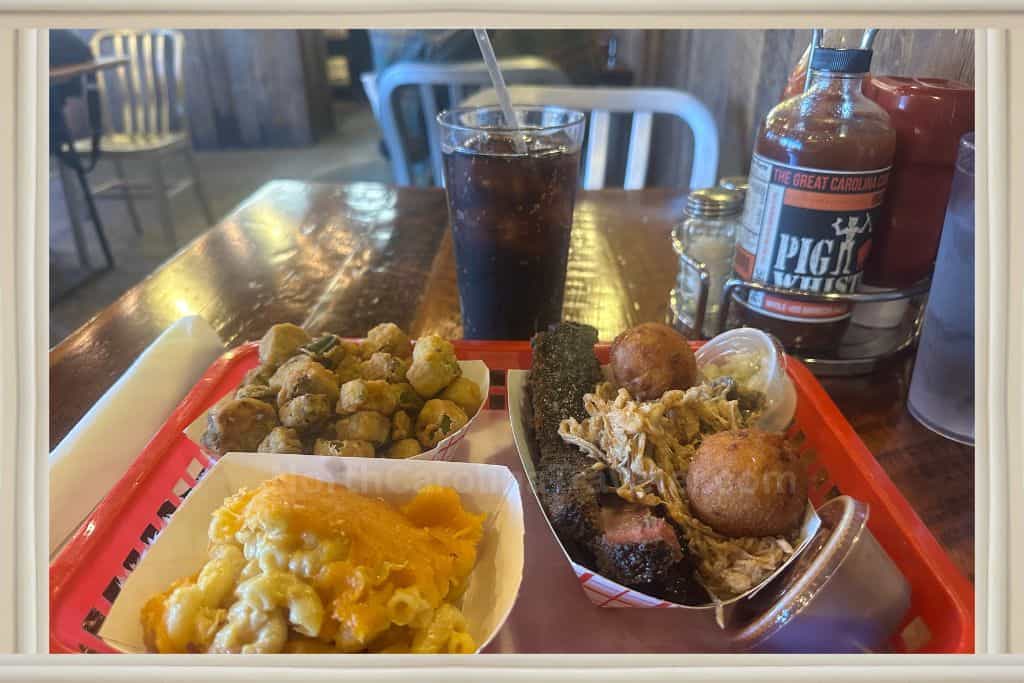
I ordered the sampler — because if you’re going to judge a BBQ place, you judge everything.
Pulled pork, brisket, hush puppies, fried okra, mac and cheese.
All the classics that tell you whether a place actually understands barbecue or is just playing dress-up.
Here’s the honest take.
The brisket was a little dry that day.
That’s worth saying.
But brisket can be tricky, and I never judge a BBQ place on brisket alone or on a single visit — especially when the rest of the plate is doing so much right.
The pulled pork told me what I needed to know.
It was tender, flavorful, and not drowned in sauce to cover mistakes.
The hush puppies were exactly what they should be — crisp on the outside, soft in the middle, and gone quickly.
The mac and cheese sealed it for me.
This wasn’t boxed or reheated.
It was clearly homemade, creamy, and balanced — the kind that tells you someone in the kitchen actually cares.
And then there was the banana pudding.

I’m a Southern girl through and through — even if I was born in Illinois, it was the southern part, twang and all.
Banana pudding is something I grew up on and take seriously. I’m always looking for one that’s done right, and I know immediately when it’s not.
This one was. Maybe eve THE ONE!
Creamy, comforting, and nostalgic in the best way, Picnic’s banana pudding may just be the best I’ve ever had — and I don’t say that lightly.
Picnic may just have the best banana pudding I’ve ever had.
And yes, I’m fully aware of how serious that statement is.
What I Keep Coming Back To
It still gets me that I lived so close for so long and never visited Eno River until 2024.
But maybe that’s the point.
Eno River doesn’t announce itself loudly.
The ruins don’t demand attention.
They wait — quietly — for the people willing to slow down, look twice, and listen.
And once you know where to look, you’ll never walk these trails the same way again.
